Interview Date: 27 August 2007 (minor updates and revisions April 2026)
Author’s note: Where does the time go? Back in 2007, I was commissioned by Jazzwise magazine to write a feature on Miles Davis’s On The Corner album, in preparation for the release of The Complete On The Corner Sessions boxed set.
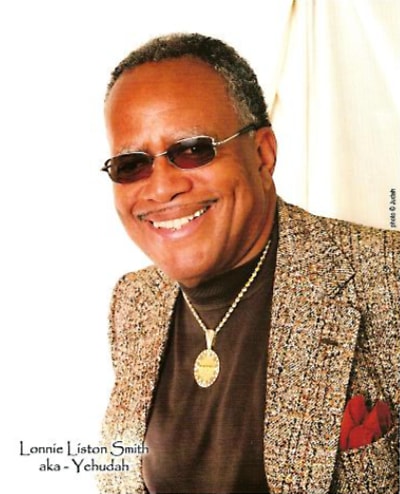
Lonnie Liston Smith © Judah
This involved interviewing several musicians who worked with Miles during this period. One of them was keyboardist Lonnie Liston Smith. When conducting the interviews, I asked additional questions that could be used for a much longer interview piece on The Last Miles website.
I interviewed Lonnie, and a quote or two from him appeared in the published magazine piece. My plan was then to publish online the interview you see below. For some reason, the interview got lost on my radar. Now, it’s been unearthed, transcribed and edited. Despite being nearly twenty years old, most of the information has not dated – one or two people have sadly since died, but I’m glad to say that, at the time of writing (April 2026), Lonnie is still very much with us.
Keyboardist Lonnie Liston Smith is one of the pioneers of jazz-funk, but before he earned that moniker, he played with many of the big names in jazz, including Max Roach, Roland Kirk, Art Blakey, Pharoah Sanders – and Miles. Lonnie was invited to join Miles’s band in 1972 and stayed for a year, before embarking on a highly successful solo career. In this piece, Lonnie talks about playing with Miles, working with Roland Kirk, discovering a teenage bass sensation called Marcus Miller; his solo career, and mixing jazz with hip-hop.
The Last Miles: At high school you played trumpet and sang in a couple of choirs, so how did you switch to keyboards?
Lonnie Liston Smith: Keyboards were always the main instrument, but when I was in high school and college, I just wanted to be associated with everything to do with music – I wanted to be immersed in music. So I was in the choir; I was in the marching bands and I played tuba, a real big tuba. So I just did everything. And I was always playing the piano. We had a piano at home and I showed interest, so my father got me taking lessons, and one thing led to another.
When it comes to keyboards, it’s often said that McCoy Tyner was a big influence on your playing. Was that the case?
No! They always say that but when I was young, I listened to everyone: Fats Waller, Art Tatum, Earl Gardner, Oscar Peterson, Hank Jones, Tommy Flanagan, Duke Ellington and Count Basie. I always liked the horn players – Charlie Parker really inspired me. And of course, John Coltrane and Miles.
When I was working with Max Roach [around 1967], he told me a story about Charlie Parker. Charlie Parker used to take jobs in the clubs, any kind of job, just to hear Art Tatum play the piano. Influences could come from different directions.
What was it about Charlie Parker that inspired you?
I was around people’s houses, and the guys there were older. They were playing a lot of jazz. I heard this record by Charlie Parker called ‘Just Friends.’
It just seemed like he was floating and flying through the air. And his tone was so beautiful; he was so free. I said, “Wow, what is that?” They said, “Well, that’s jazz.” I said, “Man, that’s what I want to do.” Then of course, John Coltrane just took it completely all the way.
How old were you then when you first heard Charlie Parker?
It had to have been around fifteen, sixteen. My father was into gospel music, so we were all surrounded by gospel. Then I started in rhythm and blues bands.
Jumping ahead. When you get to New York, you play with people like Betty Carter, Art Blakey and Rahsaan Roland Kirk. I’ve got to ask you about Roland Kirk: how did you hook up with him, and what he was like to work with?
Working with Roland was very interesting because he really did play three horns simultaneously – that was unique. And he had a nose flute and he would play that too. But of course, he was completely blind. One time he went to New Orleans while the band had a break. And when he came back, for a whole week, he just wanted to play clarinet, because that’s the New Orleans thing. If he got mad with you, he would call you to his room, so you learn after the first time not to go, because he called you to his room and he would cut the lights out! That was his advantage!
Was it a challenge playing with a blind musician?
No, it’s just like Ray Charles. Once the music starts, everybody’s equal. Sight doesn’t come into the picture. It’s just music, man, because a lot of people play with their eyes closed anyway. Once he got on the bandstand, he was just a musician. When it came to cues from him, he didn’t raise his hand or put three or four fingers up or anything like that. It was mainly just audio; you just listened.
Everyone, and especially musicians, has to learn how to really, really listen in life. Your ears are really important, but a lot of people place so much emphasis on the visual. So you really have to learn how to listen, especially if you want to be a great artist.
How did you get into playing electric piano?
The first time I played the electric piano was by accident. I was in the studio with Pharoah Sanders recording [the 1971 album] Thembi in California. The Fender Rhodes was just sitting in the corner. I was playing all acoustic pianos before that. But I didn’t have to set up the acoustic piano, because this is already. So everybody was unpacking and setting up their instruments. So I saw this instrument in the corner and asked the engineer, “What is that?” And he said, “That’s a Fender Rhodes electric piano.” So I walked over, started messing with the knobs. And then all of a sudden, I started writing this song. Pharoah says, “Man, what is that?” I said, “I’m just composing this right now.” The band said, “We gotta record that.” And that was the song ‘Astral Traveling.’
I’m going to leap right forward and go on to Miles. How did you hook up with him?
I was using [percussionist] Mtume on a lot of my things I was doing around New York. Mtume was playing with Miles. When Miles wanted a keyboard player, Mtume told him about me. Then one of Miles’ representatives called. The first thing I did with Miles was a record date, they were doing [the 1972 album] On The Corner. When I walked into [the studio] there was Herbie Hancock and another keyboard player. There were three keyboardists. I hadn’t even imagined playing with two keyboards! When you’re playing with three keyboard players, you really got to listen! That was very interesting.
What are your memories of the On The Corner sessions and what was your reaction when you first heard the finished album?
I haven’t heard it in a long time, but I know it was very creative. You didn’t have any set things to do. That was the unique thing about Miles. Miles paid you to be creative, and if you didn’t create, he would get very upset. But today, it’s completely opposite: everything is so controlled. But with Miles, he hired you for your creativity and that’s the greatest thing a person can do for you.
We sat there and Miles would have certain ideas, and then you had to come up with certain colours and things. Even when I joined the band, he was going through a phase of wanting certain colours or certain sounds that you would strike.
Most of the stuff before was very structured, where you would play the standards, and you had certain chord progressions that you followed. But, I guess when he started doing Bitches Brew and On The Corner, he was trying to free the whole concept up. If he had chord structures, you’d be doing them right on the spot.
Miles was often controversial, but this was extremely controversial music.
I guess it was different from anything Miles had done. It was loose; more free. Even the album cover was different. So that was good. A lot of his fans just gave up, but the thing I learned when I got that close to Miles was that if you really listen, (we’re back to listening again!) Miles was still playing the same way, but everything else around him had changed.
And a lot of his fans from the past didn’t realise that. I thought, “Wow, Miles is still playing Miles.” But he done changed up the whole rhythmic concept; he changed up the whole background. And that just threw a lot of people. But when you just listen to Miles, because I was listening to him on stage and in the studio, I said, “Man, he’s still being Miles, but it’s coming out a different way because of what everybody else is playing.” And so that’s where he was. When musicians are playing together, you have to listen to each other and the drummer might do something or the bassist, or the horn player, and then you all might just go into a different whole new direction.
And so after the sessions, you were then invited to join the band?
Yeah. We had rehearsals at his big brownstone [house] in Manhattan. He really was unique. He would call a rehearsal and he was very true to himself. And that’s what made most musicians strong, because if you notice, when everybody left Miles Davis, they formed their own group. He was so strong within himself, and he was very honest, and didn’t play any games.
But he would call rehearsals, and then he’d get up the next day and think: “Man, I don’t feel like rehearsing.” But most people would say, “Well, I gotta go to rehearsal because I’ve already scheduled it.” But you’d go to Miles’ house, and Miles would open the door and then slam it shut! The first time, I’m looking all confused, and the other musicians are just laughing, “Man, all that means is that Miles don’t feel like rehearsing today. So we’ll come back tomorrow.”
When you were in Miles’s band, did you just play the Yamaha YC45 Organ?
That was it. I think I played electric piano on On The Corner, because it was just there. But then when I got to Miles’ house, for the first rehearsal, before they hit the road, I thought, “I’m really gonna get into the Fender Rhodes now.” But when I arrived I said, “Miles; where’s the Fender Rhodes?” And he said, “I’m tired of that.” He’d had Herbie and Joe Zawinul playing electric piano. Miles said, “I want another sound. The Japanese have just given me that organ. I want you to play that.” I said, “Miles, I never played one before. I don’t have one. Can I take it home?” He said “no” and the reason he did that was because I had to be creative every time I played the organ, because I couldn’t practice on it. But that’s why saying Miles made all his musicians strong.
What was it like rehearsing with the band that included Al Foster and Michael Henderson? And then going on stage, playing an instrument you had barely touched?
The rehearsals weren’t that intricate. The main thing is you’re playing and you get the feel for everyone. Miles was mainly listening and seeing how well it all sounded together. That was the main thing. And if everybody’s talented, it works. Like I said, there wasn’t a whole lot of structure. He would have certain riffs or a little motif that he was working on. And then, you’re supposed to try and create something. It was like when Pharoah and I were together. Miles didn’t go as far as we went [in terms of free improvisation], but I understood [what Miles wanted] right away.
And playing on stage with Miles, what was that like?
That was interesting. Oh man, sometimes it was funny, because I watched Miles and Miles had this wah-wah pedal hooked up to the trumpet. I thought, “Wow, that’s fantastic!” That’s where I got the idea from, when I did ‘Expansions’. I hooked all that up to the electric piano. So I had a wah-wah pedal hooked up to the organ. I wanted to play with my right foot, but Miles played with his left foot, so sometimes he was switching me on! Miles wanted you to watch him all the time and sometimes I’d forget and I would just close my eyes and start playing. But it was nice; it really was big fun.
Sometimes I’d be in the elevator with Miles in the hotel, and I’d say “good morning Miles,” and Miles would look up at you and say, “Are you a musician?” I said, “Yeah,” and he’d reply, “I’m not speaking to musicians today.” But he wasn’t joking. It took me a while to get used to it, because you know, Miles was a boxer and it kept you on your toes.
Was the tabla player Badal Roy in the band then?
Yeah, Miles had sitar, tablas – the whole universe was just coming at you. So then you’d get in there and you just try to create within that flow.
You also play on the track ‘Ife’ which is on the Big Fun album.
Yeah, that’s right.
And you stayed with Miles for about a year? Then you left the band in May 1973.
Yeah, I had no choice. I didn’t want to leave.
What happened?
Bob Thiele [record producer and founder of record label Flying Dutchman] called me and said. “Lonnie, everybody’s talking about you all over the world. It’s time for you to do your own record.” So I said, “Okay.” We were in California and I flew back to New York and we did [Lonnie’s first album, released in 1973] Astral Traveling in one night. I even used Badal Roy on it. I also wanted to use a tamboura, and I kept asking Roy, “When you gonna bring the tamboura?” So he finally told me that in India, only the women play the tamboura. I said, “Well I don’t care, bring me a player” [Geeta Vashi played the instrument on the album]. Then I flew back to be with Miles.
But then when the record came out, I got another call from Bob, “Lonnie, you gotta go out and support your record.” I said, “I’m with Miles Davis, I can’t leave Miles.”
And Bob kept talking to me and saying, “Lonnie, that’s the music business. You gotta do a tour.” I told Miles about it and he understood. Miles had musicians standing in line, but I don’t know what he did about keyboards after I left the band.
In fact, Miles didn’t have another specialist keyboard player in his band for another ten years, when Robert Irving III joined his band in 1983. Were you surprised about that?
Miles used to always give you compliments in a strange way. He looked at me and said, “You’re the strangest piano player I ever heard in my life.” You don’t know how to take it when you’re young. But later I spoke to an interviewer who told me that Miles had been talking about me, and that he liked my playing because I came up with another approach. That’s what he wants – he wants a different approach with everything. I don’t want my ego to take over, but maybe he just couldn’t find another keyboard player. But I appreciated the time I was there with him. It was a great learning experience.
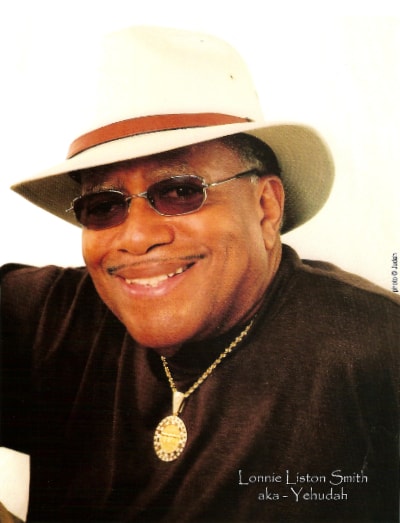
Lonnie Liston Smith © Judah
On your next solo album, Cosmic Funk, your younger brother Donald joined you on vocals, flute and piano. He’s such a soulful singer – I love his voice [Donald died in 2022]. I want to just leap forward to 1975 and the album Expansions. The music is bracketed as jazz funk, but I listened to an interview where you said that a lot of people didn’t realise that it was all jazz musicians playing on the album, and that the bass is an acoustic bass and not electric. Could you explain the origins of the title track and also about the lyrics? The music is superb but many people overlook the lyrics, which are about expanding your mind, being open and extending your hand, which I think is great.
That’s the first time I wrote lyrics. You always heard these songs about people crying the blues, and my baby, and all that stuff. I said, “Wow, man, how you gonna grow or learn something from that?” So I said, “Well, I wanna try to keep the jazz but give some meaningful lyrics that are going to inspire people to be more creative, and try to solve some of these negative problems going on planet Earth today.”
So that’s what I try to do with lyrics. I just sat there at the piano one day. I was just studying everything: Transcendental Meditation, Sufism. That’s why I wrote ‘Astral Traveling.’ I was studying astral projection. I wanted my music to help make the planet a better place for everyone; cut out some of the only craziness in the world. That’s what I meant by expansion – to expand your mind. And after you expand your mind, then you’ll give peace a chance. That was my next record [1975 album Visions of a New World). So I was really trying to connect all these things together. And then,
I had all these jazz musicians, but I didn’t realise until after the album came out how it would affect the people, but it worked.
There were guys studying the album in [music] school and saying it was an electric bass, and I’m thinking, “no, it was an acoustic bass and everybody playing came from a jazz background.” Then when I saw the history of Motown – and all those guys [session musicians] had the same jazz background. So, when you come from a jazz background into the funk, you bring more creativity
Did the recorded version of ‘Expansions’ sound like it originally did in your head?
It always ends up different from the way you start off because you got just a little blueprint working within your head. I was just going to play the [acoustic] piano, but Donald and Bob Thiele said no. Somebody might come up with a suggestion for the arrangement or something like that. We wrote that right in the studio and it came out great.
Were you surprised by its impact and longevity? I mean, it still sounds timeless today.
Sure, because I always told people, “I’m trying to come up with a universal sound.” And when I hear ‘Expansions’ today, it sounds just like we did it yesterday. And I’m really proud of that.
It’s now found great fame on at least two computer games [Grand Theft Auto: Vice City (2002) and Driver: Parallel Lines (2006)]. Were you surprised?
I was really surprised and happy. The biggest telephone company in France is using it as part of their commercial. And then it was just used in the movie called Pride. I mean, it’s just unbelievable when you hear these things, and people call to say they want to use it in this commercial or this movie.
You’re one of the pioneers of jazz-funk. Jazz-funk seems to polarise people. There are those like me who love it, and there are certain jazz purists who hate it. What’s your feeling about people who might say, ‘I loved Lonnie when he played acoustic piano, why are you playing all this electric?’
If a venue has both, I’ll play acoustic and electric. It’s all music and it’s a shame that the purists take it to that extreme because all they got to do is listen to ‘Expansions,’ everyone on there is a stone-cold jazz musician. The main thing about jazz is improvisation, so I wanted to keep that improvisation and then just put some meaningful lyrics on top of that.
Ray Charles had one of the best big band jazz bands in the world and he could take a country song and sit down and make you listen to it. And that’s hard to do because I can’t play no country songs. Ray Charles – he can just take any song and you’d be thinking, “Okay, Ray, you right.”
Now, I want to leap forward a little bit. One of my favourite albums of yours is [1983] Dreams of Tomorrow, produced by Marcus Miller. I believe you first started working with Marcus when he was about sixteen or seventeen, and he also played on two albums of yours, both released in 1978 [when Miller was nineteen], Loveland and Exotic Mysteries.
One of Bob Thiele’s biggest fortes was that he stayed out of your way. And so when it came to Dreams of Tomorrow, Bob was saying, “You want to do another record?” And so we started talking about who’d produced it. I said, “Let’s just let Marcus produce it.” When I first heard Marcus play, he was sixteen years old, and he was jamming. I thought, “This kid can play.” Then he put his bass down, sat down at the piano and said, “I got a song for you.” Then he started playing ‘Journey into Love’ [which appears on Loveland]. I think Dreams of Tomorrow was Marcus’s first production.
Dreams of Tomorrow is an interesting mix. You’ve got the funk of ‘Never Too Late,’ the opening ballad ‘A Lonely Way To Be’ and a solo keyboard number, ‘Garden of Peace.’ Did you record a bunch of tunes and then select from them?
Oh no. Marcus brought in some songs – he’s a good writer. I did all the background [sounds] in the studio and he liked that, because it added colours to it. He played these tunes and I’d say, ‘Yeah, that’ll work.’ There were never any problems.
The closing number, ‘Garden of Peace’ is such a beautiful tune.
On each record, I would try and do something like ‘The Garden of Peace.’ I’d think, “I’ve got to put something really cosmic [spiritual] on the record.” So, I was playing on the piano and I thought, “Yeah, a garden of peace – we all need that.” It blew my mind because I just did it to be cosmic. It was something beautiful. Now, every rap artist is recording or sampling it. It’s on Mary J Blige’s album [it’s sampled on her hit record ‘Take Me As I Am’. Whoever put all that together did a great job because they didn’t tamper with me – it’s just real.
Did it take you long to compose it?
No. It was the last song and there was just me and the engineer [in the studio]. So we recorded, I listened to what I did and then overdubbed the electric piano to try and add more beautiful colours.
Well it’s one of my all-time favourites.
That’s fantastic! Because I put it on just for me!
Going back to Miles, when you left his band, did you stay in contact or keep an eye on what he was doing musically?
Yes. I’d sometimes run into Miles or one of the guys who were playing with him. Miles was it – everybody looked to Miles. When Miles was thinking of hiring Marcus he called me, “What do you think of this kid Marcus Miller? I heard he worked with you.” I said “That’s great Miles; you’ve found your twin!” They’re both Gemini! Miles didn’t want to hear that! He said, “Bleep! Bleep! I didn’t ask you that!” So for once I acted like Miles and said, “He wouldn’t be with me if he couldn’t play.” He said, “That’s what you should have said in the first place.” Then he slammed the phone down!
What did you think of the music Miles made during the 1980s?
I enjoyed it. I knew where Marcus was coming from. It was great, because Marcus added more form to it and so the average person could relate to it. With something like Bitches Brew, Miles was in transition and he wanted to free-up his band. So everything was kind of loose, which was good, but Marcus gave it more structure. The average person likes structure, because it gives them something to hold on to. I think it was a good period and Tutu got great airplay.
Some people thought Miles shouldn’t be playing tunes like ‘Human Nature’ and ‘Time After Time.’
When he did those tunes, especially ‘Time After Time’ – I would never have listened to ‘Time After Time’ before that. Miles turned it completely around and I thought, ‘That is beautiful.’ It takes genius to do that.
On his final album, Doo-Bop, Miles was moving in the direction of hip-hop. You’ve played on Jazzmatazz, an album that mixes jazz and hip-hop by Guru. What’s your view of jazz fusing with hip-hop?
There are real possibilities if they go in with real musicians. When Guru called and said he was putting together Jazzmatazz, he mentioned Branford [Marsalis] and Roy [Ayers],and that was interesting, plus they paid you good money. I thought, “Okay, let’s try it.” I only did one song.
MTV wasn’t interested in jazz, but with this album, MTV drove us crazy! People were saying “Rap meets jazz,” and I was being called up for interviews. Donald Byrd went on a tour with Guru. Young people were buying jazz albums to find samples they could relate to and write lyrics to.
Guru was using a turntable and I was saying to him, “You should have a real bass player and a real drummer. It would be a whole new situation and you could do a lot more.” If hip-hop players used live musicians, it would get closer to jazz. Back in the seventies you had The Last Poets and they used to have very positive rap lyrics. We used to do concerts together and they even had Trane [the music of John Coltrane] playing in the background. The rappers have really got to relate to the music.
Talking to you I get the impression that although you embrace modern technology and sampling, real musicians and real instruments are very important.
George, I travel all over the world and I’m shocked by the number of people – especially kids – who have never seen live musicians. Then when they hear you, they say, “Wow, that sounds great!” You can’t get away from being organic; from real music. If we let the machines take over, that’s going to be a great downfall. But I’m running into a lot of young musicians, many of them are coming out of the church, and they’re playing!
What do you think of the jazz scene today? You formed your own record label, Loveland Records.
I tried that but the whole key thing in the music industry is distribution. You can make the greatest record in the world, but if I can’t get it to you or to Japan… I hooked up with a distributor, but then they filed for bankruptcy. As for the music scene today: I’m still looking for the next Trane, or the next Miles or the next Joe Henderson. At least Sonny Rollins is still with us [he has since retired from playing].
Of course, Max [Roach] has just gone [he died on 16 August 2007]. I had an opportunity when I was with Art Blakey to sit down and talk to [Thelonious] Monk, who used to come by and hang out with Art. Monk was saying that, if a musician doesn’t come up with his own sound and his own style, he hasn’t done anything. With a lot of smooth jazz, they all sound alike. You got to come up with your own style; your own sound. That’s the key to creative music.
Many thanks to Lonnie for his time (and patience!), and for the images.