Interview date: 15 November 2024
Drummer John Riley has had many memorable musical experiences, but none could top the one he had on 8 July 1991 at the Montreux Jazz Festival. John was one of fifty musicians on stage with Miles Davis and Quincy Jones, playing the classic Gil Evans’ arrangements from Birth of the Cool, Porgy & Bess and Sketches of Spain.
Image courtesy of © John Riley.
In this interview, John recalls the concert rehearsals and what it was like being on the stage and a part of this momentous occasion. John also talks about many of the jazz musicians he worked with over the years including, Woody Herman, Mel Lewis, Stan Getz, Dizzy Gillespie, Mike Stern, John Scofield, Bob Berg, George Gruntz, Joe Lovano, Bob Mintzer, John Abercrombie, Steve Swallow, Grady Tate and Wallace Roney. He also discusses his near thirty-five-year stint as house drummer for the Vanguard Jazz Orchestra.
The Last Miles: At the 1991 Montreux concert, you were a member of the George Gruntz Concert Jazz Band. How did you get to play with that band and what was the band doing before the Montreux concert?
John Riley: I had played with a trumpeter named Marvin Stamm, who recommended me to George Gruntz some years before that concert. I had done a number of tours with the band; we went to Russia and we did a bunch of different tours. He had a revolving cast of musicians, and I was one of two or three drummers that he would use on different tours. And he happened to get this call to provide a band for Quincy Jones and Miles at Montreux, and I was in the band. I forget if we were in the middle of a tour or not, or if it was, if we just formulated for that gig. I don’t recall the specifics of that. But that’s basically the story.
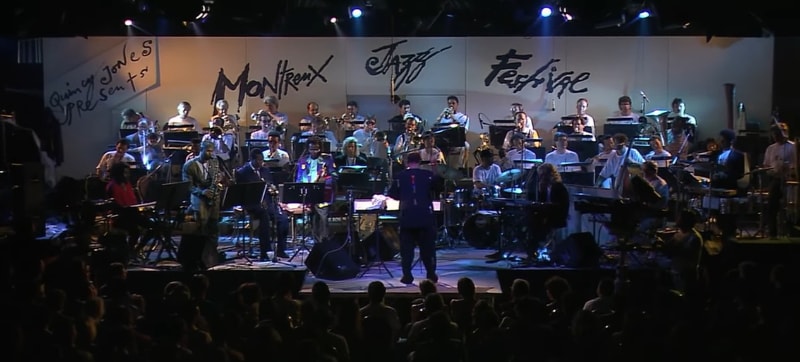
Miles and Quincy: John is on the extreme right, in white.
Can you remember your reaction when you learned that you’re going to be playing at Montreux and with Miles on the same stage?
I was really excited. Originally, we thought that it was just going to be George’s band accompanying Miles and playing that music. And then, as I understand it, the music that they wanted to play – Birth of the Cool, Sketches of Spain – was controlled by Gil Evans’ widow and she wanted musicians from the former Gil Evans big band also included in the project. So that’s how it became two musicians on each chair. The drummer in the former Gil Evans band was Kenwood Dennard.
Kenwood and I arrived separately for the rehearsals in Montreux. I assumed that, because I had my drums and cymbals were set-up, and he had no gear, that I was going to play drums and he was going to play percussion. But when we got there [drummer] Grady Tate was also present. I had worked a lot with Grady because he was also in addition to a great drummer, he was a great singer. Grady saw me with my drums and he said, “I’m 59 years old, I just want to sell my drums and be a singer, but now I’m running into Miles because Quincy didn’t know you and Kenwood were going to be there, so Quincy brought me in to play.’ He then said, “You should play on this,” and I said, “No. Quincy wants you to play.” So he played on my drums.
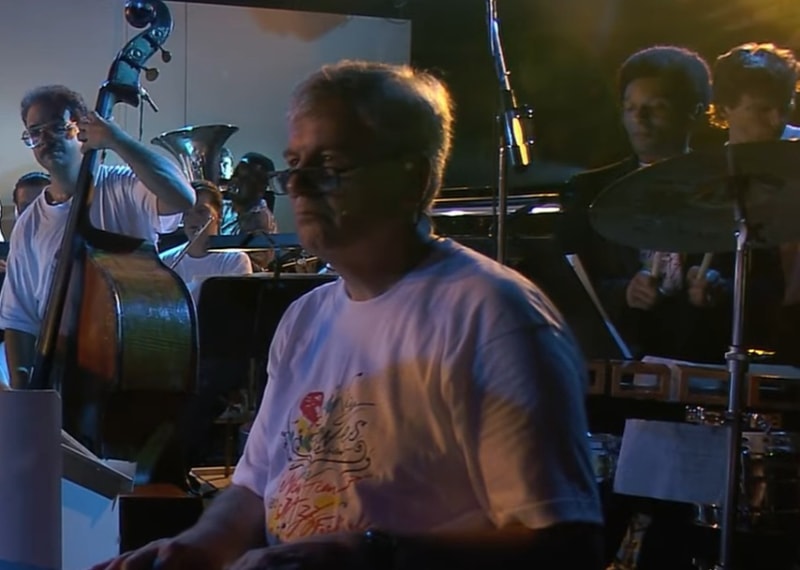
Miles and Quincy: John can be seen on the far right, behind Kenwood Dennard.
And so on the night itself, what was your set-up and where were you on the stage?
If you’re looking from the audience perspective, I was on the right hand side, about a third of the way back. Kenwood and I are standing playing percussion. We were playing the parts that Elvin Jones and Buster Bailey played on the original recordings [of Sketches of Spain].
Can you tell me a little bit about the rehearsal process itself? I believe it lasted two days. Who was running them?
It was a combination of Quincy and [keyboardist] Gil [Goldstein]. Quincy was basically conducting, but if there were any questions about things, Gil was the source.
Gil and Quincy were there for the whole two days?
As I recall, yes.
Had you played any of the music before?
I had played the Birth of the Cool music featuring Jon Faddis on trumpet in the ensemble, but not this double size ensemble. So yes, I had played that music and it was great to play. And the stuff I hadn’t played I was really familiar with from the recordings. They’re classic.
Everybody seems to have a favourite period of Miles’s music. Did you have one?
Well, I’m a big fan of everything he created, but I guess I would say the 60s, well, both the 50s bands and the 60s band were my favourites.
Any particular albums from those eras that stand out with you?
I would say the record Milestones and then maybe ESP or Nefertiti. So many of those 60s albums are great.
And Miles obviously played with an incredible cast of drummers. Are there any of his drummers that particularly resonate with you?
Well, they were all exceptional, but I suppose Tony Williams. I wasn’t old enough to see him play [with Miles], but what he was doing was more current in my formative years.
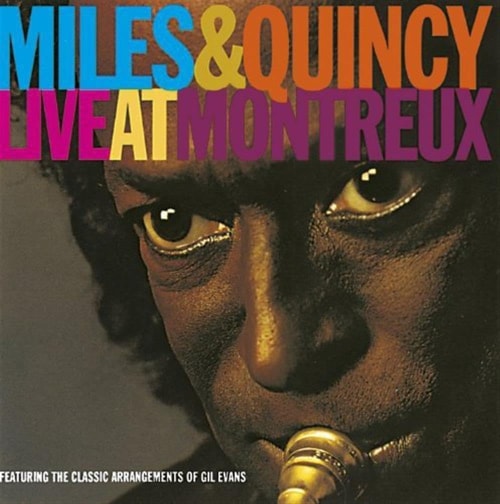
Miles and Quincy CD cover.
So back to the rehearsals then and Miles hasn’t turned up. He finally arrives at 11pm at night and there was a lot of relief in the room.
He walked into the room in a crazy leather outfit with all these things dangling off of it and wearing giant glasses. I don’t remember if he had his horn with him or not. But he made an appearance and it was a breathtaking relief when he walked in the room. We knew he was in the hotel, but we didn’t know if he was actually going to show up.
So all of the work with Miles was done on the second and final day of rehearsal?
Yes; the concert was that night.
What was Miles’s playing like at this stage?
What I remember was on the first song they asked him to play, they put the music [chart] in front of him and he was having difficulty seeing it. So they sent the music off to have it blown up on a photocopy machine or something. They brought these really big versions of the music, so that he could see it. Yeah. He would have Wallace play the first couple of notes of each song, and as soon as Miles heard those first few notes, he knew the rest of the song. So he didn’t actually need to read it. And Wallace would begin almost all the songs and then Miles would jump in after a couple of seconds and finish them.
And so at the end of the rehearsal what was the feeling like in the room: excitement, anticipation?
Absolutely, but also a little fear. Like how is this thing going to come off? And that’s part of the excitement and anticipation.
And then the actual night itself, what are your biggest memories of it?
That everything held together and came together well. Miles and Quincy and everyone seemed to be really joyous afterwards and were sort of congratulating each other. And then I remember the band that followed us at the concert was this Bulgarian Women’s Choir, who were a really heavenly ensemble, and that was almost like a magical moment when these women in really elaborate traditional clothes came out and sang after Miles. So we were actually the opening act for them!
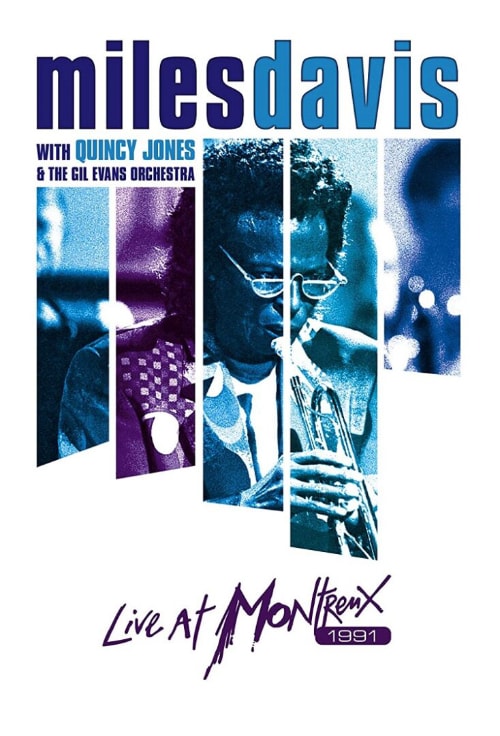
Miles Davis with Quincy Jones DVD.
Did you get a chance to speak to other Miles or Quincy?
Quincy was an organiser, so he had a lot on his mind. But he seemed really happy that this thing was finally coming together. My understanding was that he had been asking Miles for twenty or twenty-five years to do this kind of thing. Miles seemed to be happy and glad to be sharing in the moment.
And he played strongly.
Yeah. There were points where I guess he was getting a little fatigued and he would hand off a solo to Wallace. He would play half of a solo and then Wallace would take it up or Kenny Garrett would continue it. But when he did play, he sounded strong.
It’s hard to believe Miles died roughly three months after that concert. Was there any indication at the time that he was really unwell?
He was a small man and he was very trim, but there was no indication that this was imminent.
We’ve got to mention Wallace Roney, who was with you in the George Gruntz band. What are your memories of Wallace?
Wallace was a disciple of Miles. He was also a huge fan of drummers. He played in Tony Williams’ band, so we had a lot of conversations about music and Tony and Miles. He was a generous person and a generous musician, generous to play with.
And did you have any interaction with Grady Tate at all on the night?
I had worked with him before. He played a lot of gigs as a singer and he seemed to call me for the gigs that were in prisons. It was a kind of community service that he was providing, and we did them with a trio with Albert Dailey on piano and Lisle Atkinson on bass. We had a ball. We did a bunch of those gigs and Grady was easy to work with. He had a rapport with the inmates – they really enjoyed his performances and the way he interacted with them.
How did you meet Grady?
I was playing in a rehearsal band in New York, and it was in the back of a bar that a lot of studio musicians used to hang out in between recording sessions. This was a place where Clark Terry and Grady and Thad Jones would all hang out. I was doing a rehearsal and Grady happened to be in the front. I had never met him and I didn’t know he was there, but I was playing this music and I played a phrase that caught his ear. He came back and said, “Man, you’ve got to show me that.” So I showed him the little lick I was playing and then he started hiring me to play with him. So I had known him for maybe ten years before the Miles concert.
Were you disappointed not to be playing the drums on the night?
I was disappointed but I got over it quickly. I think it was a miscommunication, but I was happy to contribute what I did. There aren’t many people who can say they stood on the stage with Miles, and played that music as well. So many people were just relieved and grateful it happened because that music was very rarely played live. It was a special night and I was really honoured to be there. I’m glad it took place. I’m glad Quincy could pull it off. If he’d left it a year later, of course, it would never have happened. So, yeah, it’s amazing.
I know The Beatles were a great musical inspiration and you received a snare drum when you were eight. Tom Sicola was your first music teacher. You were playing rock music at twelve and then a music teacher gave you a couple of albums featuring jazz drummers Gene Kruppa and Max Roach, which got you into jazz. But when you went to study music at the North Texas University, your father insisted on you studying classical percussion.
Well, that’s true. My father was a businessman and he didn’t know any successful musicians, but he knew that if I became a doctor or a lawyer, he knew people that could help me with a career. So I think that he felt that I wasn’t taking advantage of an opportunity that he might be able to help me with.
He was a good father and he had this idea that if I had a classical degree and I failed as a musician, that classical degree would have more value at IBM than a jazz degree, which is not true. He was trying to be helpful in the parameters of what he knew. So I was a classical major for the first two years in school and then I was able to switch to become a jazz major. And it wasn’t that difficult for me to convince him at that point that my heart was really in the drum set and rather than playing a marimba.
Do you think your classical education has brought some benefits as a musician?
Absolutely. I played in a number of orchestras and the way musicians blend together and their dynamic control, and just the ideas about form and pitch were definitely beneficial.
Do you think it’s important that musicians can read as well as play?
I think if you can play by ear, that’s fine, but I definitely think there’s a benefit to being able to read. If you play by ear, like a person who wants to learn about Chinese history, and they ask all their friends about Chinese history. Some friends give accurate information and other friends give inaccurate information and you don’t know which is which. If you want to learn about Chinese history and you pick up a book written by an authority on it, then you get the facts. So if you learn by ear you can be misdirected.
But if you have the addition of good ears and the combination of an authoritative method book; that can just make the process better. And in addition to that, if you’re in a rehearsal situation and you can’t read, it means you have to listen to the music a few times before you can find your part. But if you can read, then you can see what it’s going to sound like before you even play it. So you can realise the final product in a much shorter amount of time. And so you can be more of a benefit to the bandleader because time is always of the essence.
So if a bandleader has to wait for you to hear something three or four times before you get it, that’s a disadvantage versus someone who can see it immediately and know what it’s going to sound like. On the session scene it is obviously a must-have skill. Now, there are advantages to learning things by ear and most people that are good readers also learn things by ear. But without that reading skill, you’re not quite as valuable to a wider range of band leaders.
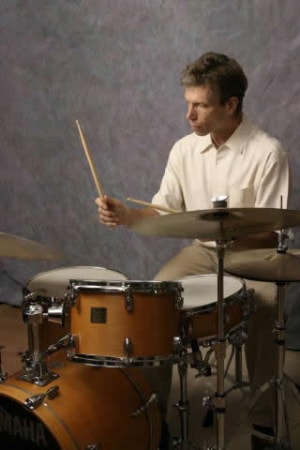
You moved to New York in 1976 to really carve out a music career. But I gather before that you did seriously consider becoming a vet?
When I was in my early teens, I had a golden retriever, who I was training for competitive dog shows. I did a bunch of these obedience dog shows and the dog was really a good friend of mine, so I considered that as well. My father would have been happier with that, especially at that point in my life when I was looking at going to college. But he came around.
So what was it that prompted the decision to move to New York and try and make a living as a musician?
All my favourite players were in New York. It was as simple as that.
Can you tell me a little about your early days in New York? Was it tough when you first hit New York or did you get gigs pretty quickly?
It was tough, but I pretty quickly got gigs that weren’t necessarily musically satisfying or challenging, but they allowed me to pay the bills.
Where were you living in New York initially?
The first couple of weeks I lived at my grandmother’s house on Long Island. I had some classmates, the pianist Lyle Mays and [bassist] Marc Johnson, and they had moved to New York before me. They were in a building in Manhattan on 86th and Broadway and Lyle decided to get a bigger apartment. I heard that his apartment was available, so I moved into it and lived there for seven or eight months, until my practicing drove my neighbours crazy and they started calling the police on me. So I had to look for another place.
I was playing some wedding gigs and one of the guys I was working with mentioned that there was a Catholic newspaper that occasionally had apartment listings in the back of it and I should check it out. So I got this newspaper – I think it was called The Tablet – and there was one ad for an apartment in Queens. I went and looked at it and in fact, it wasn’t an apartment, it was a little house that didn’t share any walls with anyone. And I thought this would be perfect because I wouldn’t be disturbing people. So I went there and met the landlord. His name was John Dorsey, and he was from Ireland. He asked me, “You’re Riley, John Riley, are you Irish?” I said, yes and then he asked, “Are you Catholic?” I said, yes and he said, “You can have the apartment.”
I lived there for a few years and then eventually bought a two [bed-room] family house in Queens where I could practice whenever I wanted to. So I got a little lucky finding John Dorsey.
How did you end up getting the Woody Herman gig?
That came through the bass player I mentioned, Marc Johnson. We had been students together at North Texas and he was with Woody Herman’s band before me. When Lyle Mays was with Woody Herman’s band he brought Marc in. And then when the drummer Jeff Hamilton left Woody Herman’s band [in 1978], Marc suggested me for the job. So that’s how that came about.
And what are your memories of Woody Herman as a leader and a musician?
Woody at that time was 65 years old. And prior to me joining the band, the band travelled by bus and Woody had a Corvette, which he always drove behind the bus, from gig to gig. One night he fell asleep at the wheel and had a terrible accident. He broke both his legs and lost all his teeth. And this was in the period when Jeff Hamilton was in the band. So by the time I got there, Woody was starting to recover, but he was still using a walker.
He had the band manager named Bill Byrne, who would attach Woody’s false teeth before the gig, so Woody seemed like he was a hundred years old when I joined the band. That’s when you saw him off stage, but as soon as he walked on stage, he became like Hercules – he totally energised and unified us.
He inspired and connected with the audience. And he said, “You know, the audience doesn’t know what we went through to get here, but they bought their tickets three weeks ago and they’re excited for us to be here. So we have to give them one hundred percent.” And it was a great band at that time with Marc Johnson and then later Jay Anderson playing bass. [saxophonist] Joe Lovano was in the band, Gary Smulyan [saxophonist].
It was a fantastic band. Woody started in the Thirties, but he was not nostalgic at all. He wanted the music to move forward, and so he always had new writers adding new stuff to the library. We would play three of his hits, ‘Woodchopper’s Ball’, ‘Early Autumn’, and four others every night. But the rest of the set was new music. And the band worked 50 weeks a year, almost all one-nighters. So there was a real sense of camaraderie. And at this point, Woody was riding in the bus with us because of the car accident. So there was a real feeling of community.
And everybody was listening to music all day and night on little cassette recorders on the tour. And so I would be exposed to all different kinds of stuff because of the different interests of the other musicians.
I’ve always enjoyed Woody’s 1978 album, Chick, Donald, Walter and Woodrow album, which includes several Steely Dan tunes. Did you play on that album?
Jeff Hamilton played mostly on the album. I was in New York. I flew to Los Angeles to join Woody Herman’s band and Jeff Hamilton took his drums and suitcase off the bus and I put my stuff on the bus and this was the day after they finished that recording. And then a few months later Woody wanted to add a couple of tunes to it so I played on the tunes that were added.
Do you remember which ones you played on?
One of them was called ‘FM’.
He also covered ‘Aja’ ‘Green Earrings,’ ‘Kid Charlemagne’ and ‘I Got the News’.
Jeff played all of those. It sounds great.
What intrigued me was that Aja album has an amazing array of drummers including, Steve Gadd, Bernard Purdie, Rick Marotta and Ed Greene, Which of your contemporaries are you particularly impressed with?
Drummer-wise: all of them. Names that stand out: Jeff Hamilton, Adam Nussbaum, Kenny Washington, Joey Baron, Peter Erskine, Steve Smith.
Mel Lewis was a great support for you wasn’t he? What are your memories of him?
Well, the first time I heard him was when I was a freshman at North Texas. Thad Jones and Mel Lewis were guest artists with this band they called the “One O’Clock Lab Band.” I wasn’t in the band at the time, but they brought their library and were guest artists with this university band. And for the remaining four years I was in school, that library was pretty popular among students, so we played a lot of that music. I didn’t really understand the subtlety and power in Mel’s playing at that time. He’s not as blatant as many other drummers but amazingly supportive and powerful in his own understated way.
I’ve come to appreciate so much more as I’ve become more mature. Mel heard me play with the band – I guess it was in the early Eighties – and liked something about what I did. He started to send me as a substitute for him, not with his band, but other bands. And that was helpful for my career to have someone like him kind of in my corner. Other people that put a good word for me were Jack DeJohnette, Marvin Stamm and Grady Tate.
And then one day, Mel had a gig on a Monday, and he was supposed to play at the Vanguard that night. At that time the band usually started at 10 p.m. and played three sets. That night, they started late around 10.20 pm, but I got a call about ten minutes to ten from John Mosca, the trombone player, saying Mel had a family emergency and could I come and play tonight? I had never played with the band.
I was living in Queens at the time, I got in the car, got down there and the band had started playing. Joe Lovano had moved from the saxophone section to play drums – he’s a pretty good drummer. And then they finished that tune and I went up and finished that set, and played the next set. And by that time, you know, it’s one- thirty in the morning or something. And Mel Lewis arrived in the club and we’re about to play the third set. And I said, “Mister Lewis: would you like to play the third set?” and he said, “No, I like what you’re doing; I’d like to listen.” Then he said the most liberating thing possible: “Play it the way you hear it” and that was I guess a vote of confidence on his part.
And then he started calling me off and on to sub for him with that band. And so that was the beginning of a long-term relationship. I hate to say it, but I’ve now been in the band longer than he was.
Wasn’t there a time when Mel said, “Your drum sounded a bit off,” and you replied, “It’s your drum kit. I’m not going to tune it!”
I was playing with a band led by a guy named [pianist] Richie lacona. We were the opening act for Benny Goodman and Mel was playing with Benny. I arrived with my drums and the sound man said, “You can use Benny Goodman’s drummer’s drums.” Mel’s drums had calfskin heads on them and they’re really subject to humidity. This was an outdoor gig near the ocean and the sun went down, the humidity came in, and the pitch of the drums went subsonic. That’s why Mel said the drums sound terrible!
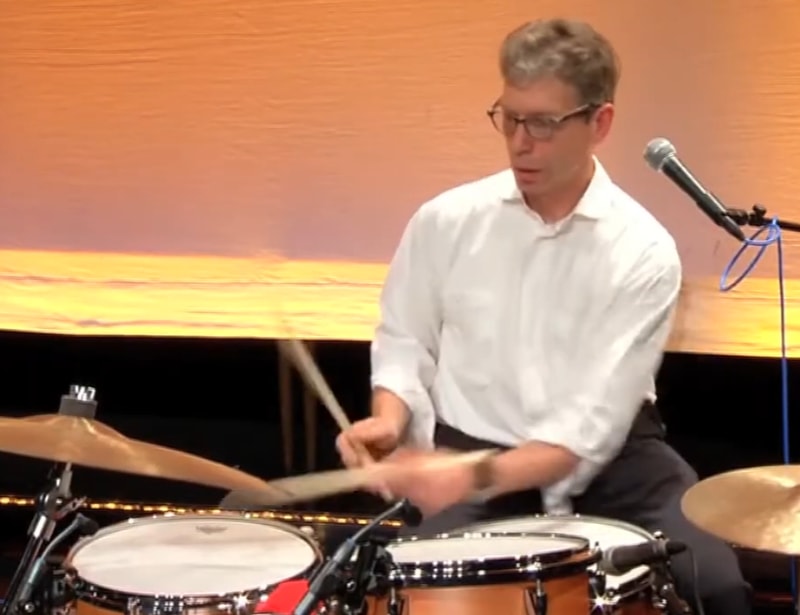
John Riley on the drums.
You also played with Stan Getz.
I auditioned for Stan Getz and he hired another drummer. A couple of years later, drummer Victor Lewis joined his band. Victor was super popular at that time, he was playing with Dexter Gordon, Woody Shaw, David Sanborn, and he was playing with Stan Getz.
And at one point, Stan had a tour and Victor said, “I’m sorry, I can’t make it.” So Stan called me to do the tour. We met in the airport and I shook his hand and said, “Mr Getz, it’s nice to finally be playing with you.” And his reaction was: “you’re not playing with me; you’re working for me.” That was a pretty bold entry point!
Well, you did have a reputation, didn’t you? You know the saying: “What Stan wants, Stan Getz.”
[drummer] Billy Hart said, “Stan Getz is a nice bunch of guys.” He had a bunch of different personalities that could turn on a dime. But I did that tour and I did a few other tours and it was great to play with him.
Often we would play these big halls and Stan would move away from the microphone and fill the room with this beautiful sound. So that was a real treat. And on one of the tours, we were in Europe and Dizzy [Gillespie] was travelling as a single [musician]. He would play with whatever band he wanted at various festivals.
And so, he ended up travelling with us for a bunch of gigs, and it was interesting to play with Dizzy and Stan together. And Dizzy was kind of cool and relaxed, while Stan was the opposite.
It must have been incredible playing being onstage with those two in front of you.
Yeah, it was a treat.
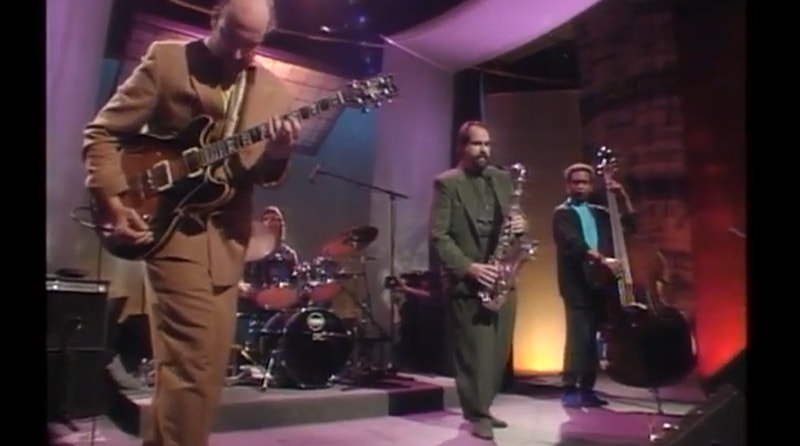
From the DVD, Live 3 Ways The John Scofield Quartet with John Riley, Anthony Cox and Joe Lovano.
I’ve got to ask you about three Miles Davis alumni that you’ve worked with. The first one is John Scofield. You played in a trio with him and Anthony Cox on bass, and then later on, with a quartet with Joe Lovano. Can you tell me how you got to play with John and what it was like playing with him?
I think the first time I played with John, he had a gig in New Jersey and he didn’t have a car. I think the reason he hired me was because I had a car and I could pick him up and take him to the gig! That was a few years before I actually joined his band.
I mentioned that Jack DeJohnette had mentioned my name to some people. And one of the people he talked to was John Abercrombie. So I was playing a little bit with John Abercrombie and Steve Swallow, who was on bass. John and Scofield were good friends, and when Scofield was looking for a drummer, I think Abercrombie mentioned my name to him. At that time, John Scofield was living in a building in Manhattan called Westbeth, where Gil Evans also lived. We had a rehearsal and we played two tunes and John said, “You’re hired.” It was a very natural, easy hook-up; it was very easy to play with him.
Prior to that, I played with Stan Getz, Woody Herman, Milt Jackson and Dizzy. Those are the guys that some people refer to as the “five-star generals of jazz.” When I was with John, it felt like I was finally playing with people closer to my own age [John Riley was born in 1954; John Scofield, 1951]. It almost felt like I was in The Beatles because the music was current and the audience was younger and more responsive; it was a really special time. I’m very grateful to have that almost two years with John.
You had an amazing chemistry with Anthony Cox. There’s one gig where you are playing a solo and then your eyes move to the left to indicate to Anthony that you’re finishing, and that it’s for him to take over. He then plays his solo; it’s just so seamless, and it was wonderful to watch. The trio and the quartet were superb bands.
Yeah, we had a great time and we worked a lot. I remember one tour we did was forty concerts in forty-four days in seventeen countries. We were traveling so much that I was keeping an inventory of how much transit time we spent each day, and it was nine and a half hours a day in transit. So basically we’re in transit and we’re playing the gig and we’re sleeping. And that was it.
It was a great time, but people only see you when you’re on stage and they think it must be marvellous [to be a musician], but then they don’t see all that happens in between gigs, particularly the traveling and one hotel to another, and dear me. Well, the special thing about that is that we’re all going through the same thing together and people peak for the gig; everybody sort of regulates their energy and their activities so that they’re most alert at gig time. So it’s not the kind of thing that we take for granted; the gig is the dessert after all the dues we paid all day.
And when Joe Lovano joined the trio, what was that like?
I had known Joe for years. John had just signed with Blue Note and they wanted him to have some stars on his first record for them. As I recall, John asked Wayne Shorter to play on the record and Wayne agreed. But as it got closer to the recording session, Wayne said, “Well, I can only play three songs and I want more money,” and eventually it didn’t work out with Wayne. I knew Joe and John kind of knew Joe from when they were at Berklee [College of Music] together. I suggested to John that he try Joe instead of Wayne, and that was a beautiful connection. The way they played melodies together was just amazing.
The two of them subsequently had a very long musical association, so you helped bring them together?
Well, I think that was inevitable, but I think I did initiate it.
You’ve mentioned on your website, you’ve also played with Mike Stern and Bob Berg.
I played a lot with Mike Stern in the early Eighties. He had regular Monday and Wednesday night gigs at a place called the 55 Bar. But prior to that, there was another bar called the 55 Bar. The famous 55 Bar is on Christopher Street, but there was another bar at 55 on Grand Street. Mike and Jaco [Pastorius] lived upstairs from this 55 Bar, and they talked the owner into letting them play music there. And I forget and he would call me to play occasionally. Sometimes the bass player was Lincoln Goines or Harvey Schwartz. Occasionally David Sanborn would be there. Sometimes a piano player named Bernard Wright played; he was wonderful.
It was a dangerous place to be hanging out, because there was a lot of trouble-making in the bar basement, and eventually that ended. Mike was always looking for a place to play regularly yeah and he found this other venue at Christopher Street.
Wayne Kranz played one night and Leni Stern played another night, and it was the same schedule every week. And Mike would call me to do that gig from time to time. I remember the first time I played with him. He plays long solos, and often, he’ll play a long intro to a song and then a long solo, and I was not prepared for the kind of pacing he was accustomed to. He could just keep going and going and building and building and building, with his chorus pedal in tow. And I would think “this must be the last chorus,” so, I’m kind of maxed out and then he hits the distortion pedal and puts it into overdrive! It took me a gig or two to recognise the patterns or the pacing in his playing, but he’s a great guy.
And the late Bob Berg?
I played a couple of tours with Bob and also in John Patitucci’s band with Bob. Bob was an incredibly powerful player with really deep jazz roots, but also a more modern approach. He might be the loudest saxophone player I ever played with! I remember one time we did a soundcheck and Bob, he played loud. He was blowing really hard into the saxophone and he blew a little hole into the neck of the saxophone. It cracked open and we thought, “Man, we’re going to have to cancel the gig.” Luckily they found a repairman on a Sunday and they patched the saxophone, and the gig went on. He was a really passionate, beautiful man. He had so many experiences playing with Miles and Horace Silver and Cedar Walton. It was great to be around him.
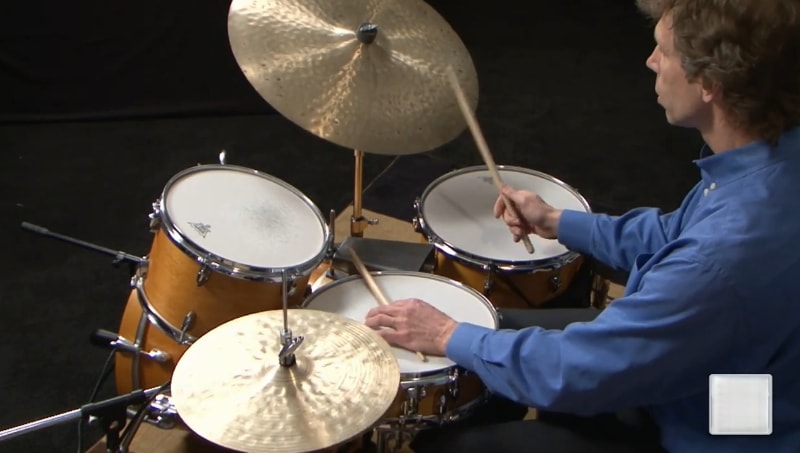
John Riley on the drums.
You’ve had a long association with another saxophonist called Bob – Bob Mintzer. I think it was in 1986 that you did the first recording with him on the album Spectrum. Can you tell me how you got to work with him and had such a long and productive musical association with him?
Yeah, we still have an association. We had been playing some quartet sessions at a pianist Peter Madsen’s place in Brooklyn, around 1985/6. Peter Erskine was in Bob’s band. But then, Peter decided to move to Los Angeles, and suddenly Bob needed a drummer and he thought of me. And so that was the beginning. I got a little lucky that Peter Erskine left New York!
Bob and I have a good rapport; in fact I got an email from Bob the other day. I still cherish the ten or so records I’ve recorded with him. We still don’t have as many opportunities to play [these days] but I always look forward to them. He’s an amazing musician, a fantastic writer; a creative guy. He’s also a good drummer. Not that many people know how to write drum parts or know what the drummer needs to see in order to play the music, but Bob really knows about that.
Could you elaborate a little bit more on that? What sort of errors do people make?
Well, what does the drummer need to do? He needs to support the ensemble and generally he needs to see where the big events are in the music and prepare for them, so that everyone else can perform them with a nice flow. Sometimes, when people write drum parts, they put too much information on the page so you can’t filter out what the important stuff is. Or sometimes they don’t have enough information or just the wrong information. I remember once I was playing a big social event and the other act had Grady Tate hired to play. They had a rehearsal and Grady was reading the music. I got really worried, because during the rehearsal, Grady didn’t play anything that was on the sheet music, and I thought, “Man; maybe he doesn’t read.” But then the show came and it sounded like he wrote the show!
So, I had to figure out what’s going on here. And what was happening was that he was reading the music, and listening to what was happening and justifying what was happening in the music. So he was filtering through it to find out where the important stuff was. And he was able to remember that and play the show amazingly. So that’s part of what we have to do. We have to discern what the arranger or the composer intended. And sometimes we have to add information to the part. Sometimes we have to edit things and thin them out. But Bob knows the right stuff to bring the music to put on the music, to bring the music to life.
I’d like to ask you about guitarist Greg Hyslop and trumpet/flugelhorn player Mike Metheny, two interesting names on your resume. I’ve been listening to their music and it’s fascinating. You played on Greg’s 1987 album Manhattan Date.
He’s a guitar player; I think he’s from North Carolina. He was good friends with a bass player named Scott Lee, who I played with a lot. We played a session with Greg, and it felt good, and he said, “Hey I want you to be on my record.” I have to confess that I’ve lost touch with him.
You did a couple of albums with Mike Metheny. The one I particularly like is the 1988 album Kaleidoscope. There’s a number on it called ‘Incognito’ that lasts almost eleven minute. You’re playing this steady cross-stick beat which reminds me of Tony Williams on Miles’s ‘It’s About That Time’.
I remember working with Mike; he’s Pat’s older brother. I don’t remember that track, but I remember Rufus Reid was playing bass on one of the records [1982’s Blue Jay Sessions] and that was a treat. I occasionally heard from Mike Matheny but it’s been a few years now. He was a nice musician, a really nice man. I think it might have been challenging to be Pat’s older brother in the same career, but he seemed to handle it really well.
Mel Lewis died in 1990 and the Thad Jones/Mel Lewis Orchestra became the Vanguard Jazz Orchestra. Mel’s legacy lives on with you in the drum chair. How did you feel about taking over the drum chair?
I wasn’t the first drummer after Mel passed. I think the rhythm section was considering me for the job, but at that time I was with John Scofield. Joe Lovano was in the Mel Lewis band, and either the managers of the Vanguard or the Mel Lewis band thought that it wouldn’t be a great idea to have a drummer in this transition period who was away as much as Joe Lovano. So the first drummer that replaced Mel Lewis was Dennis Mackrel. He’s a very good drummer and a very good arranger, but I guess it wasn’t quite what the band was looking for. After around nine months, he left the band. One of Mel’s students, Danny Gottlieb, replaced Dennis Mackrel.
Danny’s a great drummer and I knew him from my days in high school, when we were both studying with Joe Morello. Danny was with the band for a couple of months and then they asked me to join, and I’ve been there since 1991 or 1992. It’s been a fantastic growing experience for me and a treat to play that music every week.
I was watching the 50th year anniversary concert at Village Vanguard from February 2016. It was a cracking night wasn’t it? What are your memories of that?
Every night’s a cracking night! We have about 300 different arrangements in the library. Thad is the foundation of the band, but we have a number of Bob Brookmeyer arrangements, a number of Bob Mintzer’s arrangements, and a lot of Jim McNeely’s music and some Bill Holman. So the variety of music and what’s demanded of me never gets boring. And that’s a real special situation to be in. The variety of soloists in the band that I have the treat of accompanying, also keeps the thing vibrant. So I’m honoured and privileged and really enjoying all these years in the band.
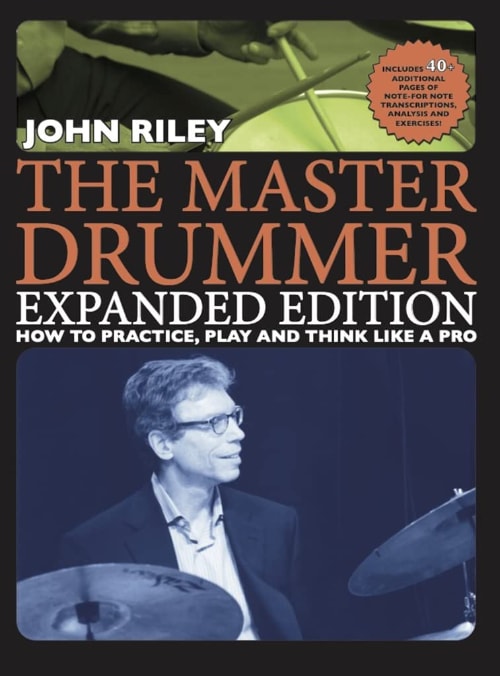
John Riley – The Master Drummer: One of John’s many tutorial books.
I’d like to end with your role as an educator, which is immense. You’ve written various books, run many courses; you’re attached to a number of music institutions, and you’ve produced tutorial videos. A couple of questions: are drummers born or are they made? And what’s your approach to teaching?
I think they can be made. What it takes is that someone needs to be exposed to something. And they need to be intrigued by it in some way. And then they need to dedicate some time to investigate it. And if all of those things are strong, then people have a good chance of getting some mastery of whatever the skill is, whether it’s playing football or doing eye surgery or playing with drums.
You need to have that combination of first exposure: “this is possible, people do this.” And then does it move you in some way to dedicate some time to investigating it? And the more it moves you, the more passionate you are about investigating it, the greater the chances are that you’ll have success. I’m fortunate these days that the students I interact with are already pretty sophisticated. So we can talk about the finer aspects of playing the instrument and of dealing with the musical setting. I’m not really in a position where I have to show people how to hold the sticks, or that you put your foot at this place on the bass drum pedal. And so the students that I meet, they come and each one has a different collection of skills and a different dream.
I think of their skills as being a circle of things and that they have control of things within the circle. I try to expand that circle so that it intersects with the skills they need to achieve their dream. Every student is at a different point and has different aspirations, but I would say over the course of a few years, almost all the same things are addressed, not in any specific order, but in the order that the student is ready for at that moment. I’ve had some students that have become very successful, very famous. People ask me, well, what was common about those guys? And my response is always, “Well, they didn’t really need me. They had the qualities I mentioned earlier and they were on a mission. And my role was just to make the path a little straighter.” So that’s kind of the way I look at it. I’m sure they would.
I think your contribution is a little bit more than that, John. One of your students was Billy Stewart?
Yes.
And there have been others as well who you’re probably going to be too modest to name.
I’m honoured that they’ve had successful careers. It’s not that easy to have a successful career. A lot of the people that I’ve interacted with are doing great. And I’m inspired by them.
There was a time, particularly in the Eighties, when it looked like acoustic drums were on the way out and it was all drum machines and electronic drums. You must be heartened by the fact that the acoustic drum kit remains as important as ever, and as popular as ever.
I’m heartened by that, especially with the music that I play. There is a lot of sampling and sequenced drums in hip-hop music, and but in jazz music, acoustic drums played by a real person still is the primary way. I’m happy about that. And I’m sure that all my students are happy about that too because there’s opportunities for them to use these skills that they’ve cultivated.
John’s website is at johnriley.org.